 No image available
IIRUC
Manufacturer
- Also known as
- Întreprinderea de Întreținere și Reparații Utilaje de Calcul; Întreprinderea pentru Întreținerea și Repararea Utilajelor de Calcul și de Electronică Profesională (IIRUC-EP)
- Country
- Romania

- Address
- Bd. Dimitrie Pompei nr. 6, sector 2, București (1989)
- Founded
- 1968
- In the archive
- 0 devices
- Last edited
- 16 NOV 2026
History
IIRUC (Întreprinderea de Întreținere și Reparații Utilaje de Calcul, the Enterprise for the Maintenance and Repair of Computing Equipment) provided service and repairs for the computers installed in Romania. Its founding decree dates from 1968, and in 1971 it moved into its own premises [1]. It was one of the units created around ICE Felix [1].
History
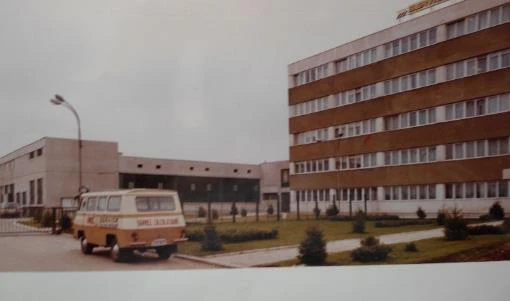
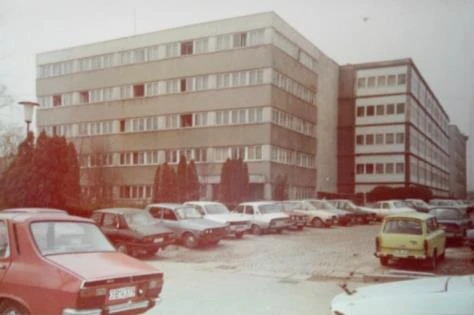
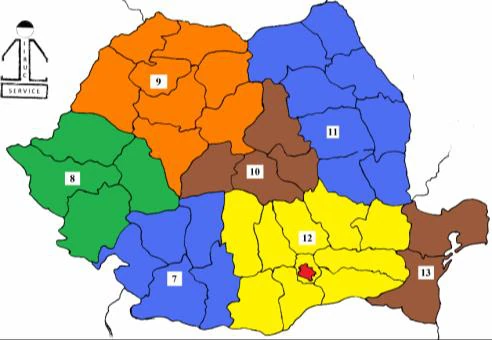
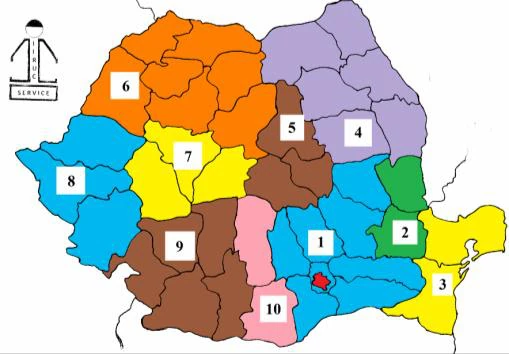
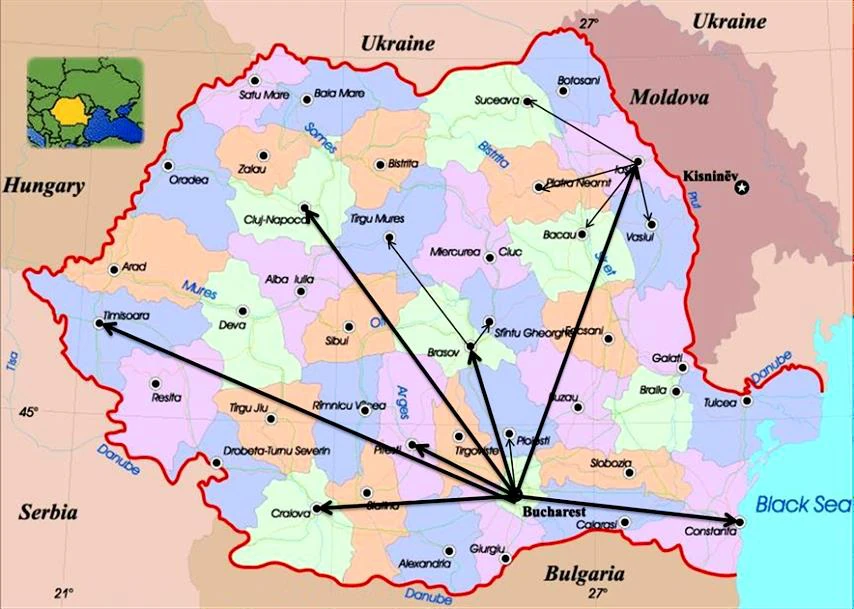
Un secol de electronică în România says IIRUC was set up by HCM 633 of 27 March 1968 and took over two service teams, CICLOP (40 people) and AMIT (7), with the billing and accounting machines, cash registers, typewriters and calculating machines they serviced, mostly from East Germany, Italy and Sweden (Optima, Olivetti, Odhner, Ascota and others) [4]. Its management worked first in an annex of the Victoria Palace, then in rented premises; work on its own seat on the Pipera platform (8 Dimitrie Pompei Boulevard) began in 1969 and it was inaugurated in January 1970 [4], earlier than the 1971 given above [1]. Its first branches, in Cluj, Timișoara, Bacău, Sibiu, Târgu Mureș and Iași, opened in 1969–1970, and by December 1989 it had 72 branches with their own buildings (about 54,000 m²), 176 service cars and territorial and national sections; the national computer systems section alone had 1,200 people, 500 of them service engineers [4]. Its staff grew from about 100 in February 1969 to about 13,000 in December 1989; the average for 1989 was 9,864 [4]. It trained thousands of service technicians, for imported equipment (Olivetti, IBM, Rank Xerox), for equipment made under licence (CII, Friden, Odhner) and for Romanian designs such as the Felix, Independent and Coral minisystems and the M18 microcomputer, and ran its own one-year qualification courses [4]. Its service contracts set an availability of about 85% for the Felix systems and 95% for IBM systems [4].
It also serviced the computing equipment Romania exported – monitors, Felix C-32 and Felix C-64 minisystems, Independent 100 and Felix C-1024 systems, billing machines, plotters and printers – to China, Syria, East Germany, Czechoslovakia, Poland and Hungary, with a central point and eight branches in Poland and five branches in East Germany [4]. In 1989 its output was 1,132 million lei (about 94 million dollars), 39 million lei of it for export [4]. After 1990 it became a joint-stock company, lost much of its staff and equipment base, was privatised in 2000 and split into IIRUC SA and IIRUC Service SA (set up in 2004); its 1990–1994 joint venture in the USA, Megapower, for a new type of power supply, went bankrupt [4]. In 2006 it was bought by Raiffeisen Informatik; IIRUC Service now has about 200 employees, 8 zones with 55 work points, a training centre in Brașov and its seat in the Novapark building in Pipera [4]. The book gives its seat as 8 Dimitrie Pompei Boulevard [4], while the 1989 directory gives number 6 [2].
The site after 1989
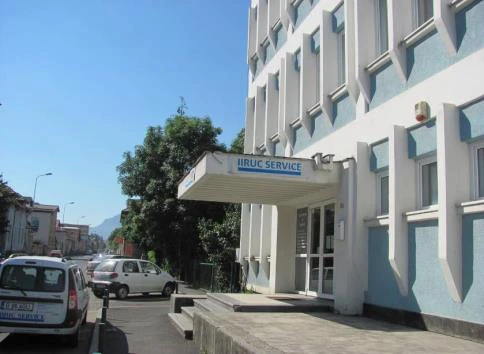
IIRUC serviced computers, typewriters and cash registers across the country, with branches in every county [3]. Around 2011 one of its buildings on Dimitrie Pompei Boulevard housed the Ringier press group [3].
In 1989
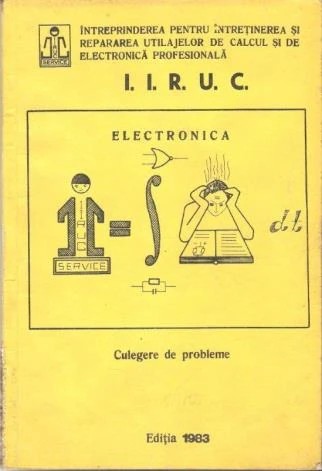
In 1989 its name also covered professional electronics: Întreprinderea pentru Întreținerea și Repararea Utilajelor de Calcul și de Electronică Profesională (IIRUC-EP), within the Industrial Central for Electronics and Computer Technology (CIETC) of the Ministry of the Electrotechnical Industry. Its logo carries the word SERVICE [2].
Gallery
 No image available
 No image available
 No image available
 No image available
 No image available
 No image available
 No image available
 No image available
 No image available
Devices in the archive (0)
No devices documented yet.
References
- [1]D. F. Lăzăroiu, N. Millea et al. – „Electronica românească. O istorie trăită”, vol. I, AGIR, chapter I „Industria electronică românească”
- [2]N. Drăgulănescu – „Agenda radioelectronistului”, 2nd edition, 1989, chapter 52 „Unități de cercetare, proiectare, producție și service – în industria electronică – din cadrul M.I.Et.”, pp. 742–749
- [3]N. Millea (coord.) et al. – „Electronica românească. O istorie trăită”, vol. II „Electronica profesională”, AGIR, section VI.5 „Foto-raid pe platforma Pipera”, pp. 541–553
- [4]N. Millea, I. Constantinescu (coord.) – „Un secol de electronică în România”, Editura Academiei Române, 2020, section VII.10, pp. 360–377