

Specifications
- Type
- quartz crystal unit, professional
- Package
- HC-6/RW, HC-33/RW, HC-25/RW, HC-18/RW (see Variants)
- Nominal frequency (fN)
- 1.4…61 MHz
- Nominal frequency, min (fN min)
- 1.4 MHz
- Nominal frequency, max (fN max)
- 61 MHz
- Adjustment tolerance at 25 °C (TA)
- ±10, ±20, ±30, ±40 or ±50 ppm
- Tolerance over the temperature range (TT)
- ±10…±50 ppm (see Coded as)
- Recommended drive level (measurement)
- 0.5 mW
- Max. drive level
- 2 mW
- Resonance resistance (R)
- 525 Ω (fN = 1.4 MHz)…40 Ω (fN = 61 MHz)
- Resonance resistance, min
- 40 Ω
- Resonance resistance, max
- 525 Ω
- Static capacitance (C0)
- 6…10 pF
- Static capacitance, min
- 6 pF
- Static capacitance, max
- 10 pF
- Temperature range
- −55…+100 °C (operating and storage)
- Climate
- temperate (N1 and N2, STAS 6692/83)
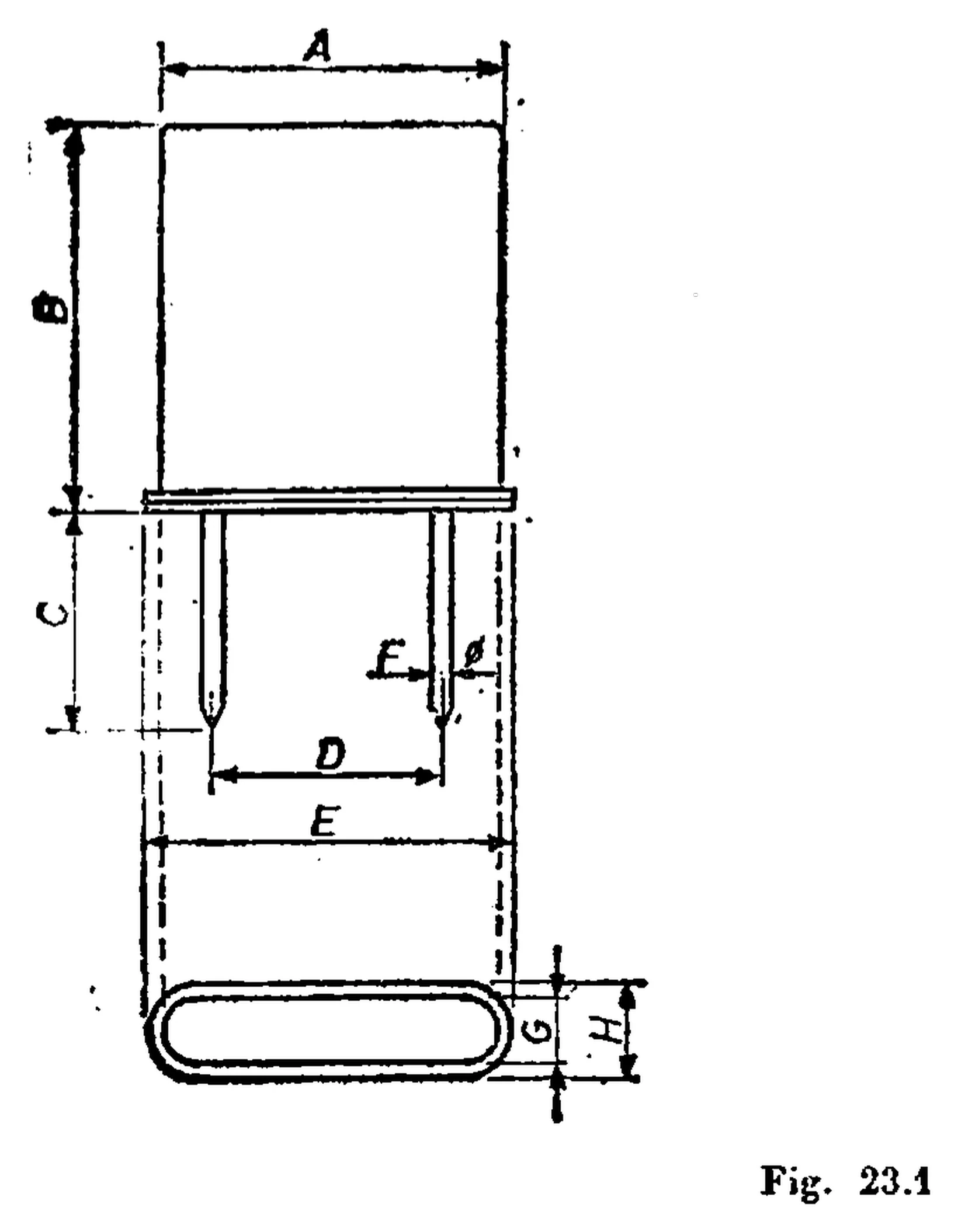
- Dimension (A)
- 10.2–18.9 mm (see Variants)
- Dimension (B)
- 13.45–19.8 mm (see Variants)
- Dimension (C)
- 6.3–12.7 mm (see Variants)
- Dimension (D)
- 4.88–12.35 mm (see Variants)
- Dimension (E)
- 11.05–19.35 mm (see Variants)
- Dimension (F)
- 0.45–1.32 mm (see Variants)
- Dimension (G)
- 3.7–7.7 mm (see Variants)
- Dimension (H)
- 4.65–9.2 mm (see Variants)
- Application
- fixed or mobile radiotelephones and any professional electronic equipment
Sources: [1]
Variants (4)
| Note | Compare | ||||||||||||
|---|---|---|---|---|---|---|---|---|---|---|---|---|---|
| RP 6 (HC-6/RW) | HC-6/RW | 1.4 | 4 | 18.9 | 19.69 | 6.3 | 12.34 | 19.23 | 1.32 | 7.5 | 9 | D = 12.34 ± 0.5 mm, F = 1.32 ± 0.07 mm | |
| RP 3 (HC-33/RW) | HC-33/RW | 1.4 | 4 | 18 | 19.8 | 12.7 | 12.35 | 19.35 | 0.81 | 7.7 | 9.2 | D = 12.35 ± 0.5 mm, F = 0.81 ± 0.07 mm | |
| RP 2 (HC-25/RW) | HC-25/RW | 4 | 61 | 10.2 | 13.46 | 6.3 | 4.88 | 11.05 | 1 | 3.7 | 4.65 | D = 4.88 ± 0.2 mm, F = 1 ± 0.07 mm | |
| RP 1 (HC-18/RW) | HC-18/RW | 4 | 61 | 10.2 | 13.45 | 12.5 | 4.9 | 11.05 | 0.45 | 3.8 | 4.65 | D = 4.9 ± 0.2 mm, F = 0.45 ± 0.07 mm |
Click a column heading to sort. „+” adds a variant to the comparison (RP).
Description
The RP is a series of professional quartz crystal units made by ICSITE of Bucharest in four packages, HC-6/RW, HC-33/RW, HC-25/RW and HC-18/RW [1]. The Agenda radioelectronistului (2nd edition, 1989) gives a nominal frequency range of 1.4…61 MHz, a recommended drive level of 0.5 mW for measurement and a maximum of 2 mW, a temperature range of −55…+100 °C for operation and storage, a resonance resistance from 525 Ω (at 1.4 MHz) to 40 Ω (at 61 MHz) and a static capacitance C0 of 6…10 pF [1]. It names fixed or mobile radiotelephones and any professional electronic equipment for a temperate climate (N1 and N2 – STAS 6692/83) as the applications [1].
Coded as (NTR-E 3249/1-83) [1]:
| Part | Meaning |
|---|---|
| 6, 3, 2, 1 (1st digit) | nominal frequency and package: 6 = 1400…4000 kHz, HC-6/RW; 3 = 1400…4000 kHz, HC-33/RW; 2 = 4000…61 000 kHz, HC-25/RW; 1 = 4000…61 000 kHz, HC-18/RW |
| 1…5 (2nd digit) | adjustment tolerance TA at 25 °C: 1 = ±10, 2 = ±20, 3 = ±30, 4 = ±40, 5 = ±50 ppm |
| 1…7 (3rd digit) | tolerance TT over the operating temperature range: 1 = ±10 ppm / −25…+75 °C; 2 = ±15 ppm / −25…+75 °C; 3 = ±20 ppm / −25…+75 °C; 4 = ±30 ppm / −35…+75 °C; 5 = ±50 ppm / −25…+75 °C; 6 = ±10 ppm / −10…+60 °C; 7 = ±20 ppm / −10…+60 °C |
| N, S | version: N = normal, S = special |
The book’s example of the code is „RP 123 – S”; the series letters RP are not explained [1]. The dimensions A…H of the four packages are those of the book’s table, with the letters of the drawing (fig. 23.1); the variant codes here (RP 6, RP 3, RP 2, RP 1) are the series letters with the first digit of the code [1].
Electronica românească. O istorie trăită (vol. II), in its chapter on the Institutul de Cercetări Electronice (ICE), says that the management of the institute’s quartz resonator micro-production section worked out the manufacturing technologies on equipment bought under a licence from the USA, and that the section delivered its first quartz resonators in 1981, at first with all materials and subassemblies imported; from 1984 the main material, quartz, was taken into production in Romania by an institute subordinated to ICECHIM [2]. Its main customer was IEMI, for radiotelephones for the police and the Ministry of National Defence, but also other enterprises making radiocommunication, telecommunication, computer and other equipment [2].
Gallery
 No image available
Documents
No documents available yet.
References
- [1]N. Drăgulănescu – „Agenda radioelectronistului”, 2nd edition, Editura Tehnică, 1989, section 23.3 „Rezonatoare cu cuarț profesionale produse în R.S.R.”, pp. 342–343
- [2]N. Millea (coord.) et al. – „Electronica românească. O istorie trăită”, vol. II „Electronica profesională”, AGIR, chapter II „Institutul de Cercetări Electronice”, section II.4.13 „Secția microproducție Rezonatoare cu cuarț”, p. 139