 No image available
IEMI
Manufacturer
- Also known as
- FEMI (1968–1973), IEMI SA (after 1991)
- Country
- Romania

- Address
- Șos. Fabrica de Glucoză nr. 9-11, sector 2, București (1989)
- Founded
- 1968
- Closed
- 2008
- In the archive
- 147 devices
- Last edited
- 03 OCT 2026
History
IEMI (Întreprinderea de Aparate Electronice de Măsură și Industriale, the Enterprise for Electronic Measuring and Industrial Apparatus) was one of the main Romanian manufacturers of electronic test and measurement equipment. It was based on the Pipera industrial platform in the north of Bucharest.
From FEMI to IEMI
The company was founded in 1968, by a decision of the Council of Ministers, under the name FEMI (Fabrica de Aparate Electronice de Măsură și Industriale) [1][2]. Its first activity took place within the Electronica works, on Venerei Street in Bucharest. The first production capacities on the Pipera platform went into operation in the third quarter of 1970 [1]. Production there was based on Romanian designs taken over from Uzinele Electronica, together with the design and production staff of its measuring-instrument sections [5]. The activities, equipment and technical staff, transferred from Electronica and from Electromagnetica, moved there gradually from Venerei Street [3].
In 1973 the “factory” became an “enterprise”, and the name changed from FEMI to IEMI [1][2]. The emblem shown above, a circle crossed by waveforms, dates from the FEMI years and remained the most widely used logo of the company. The technical-administrative building was completed the same year; behind it stood the production hall, with about twice its ground area [3].
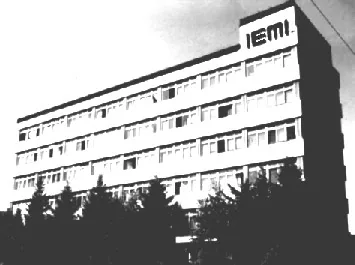
The plant occupied a large area between Dimitrie Pompei Boulevard and Fabrica de Glucoză Street, where its five-storey administrative building stood [4].
Products
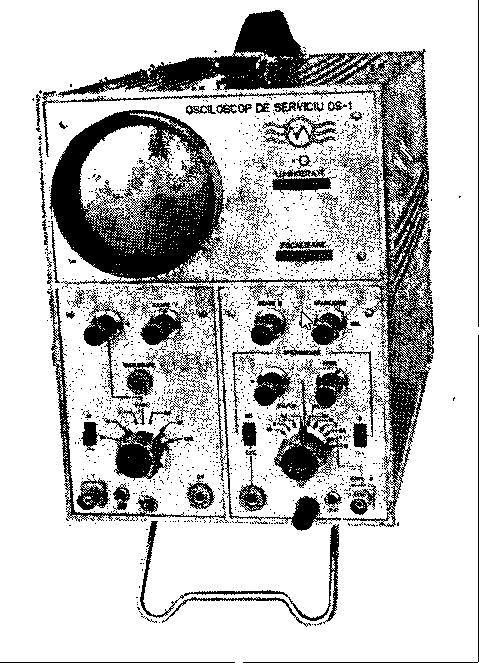
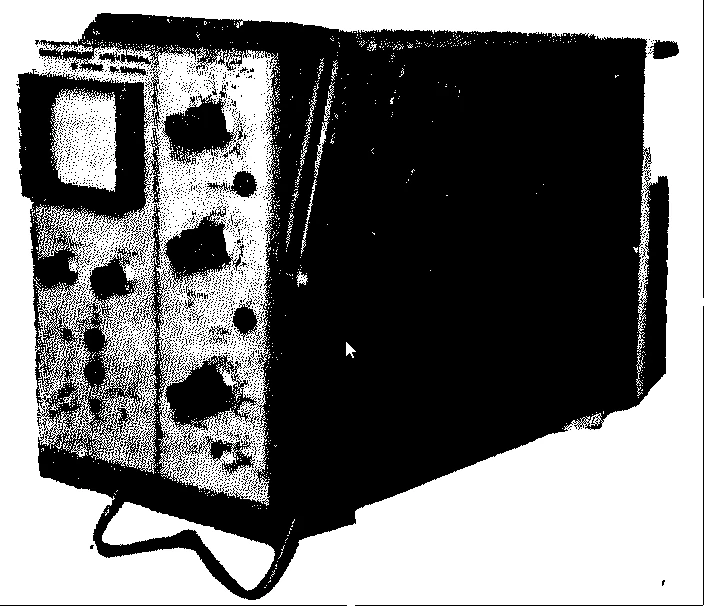
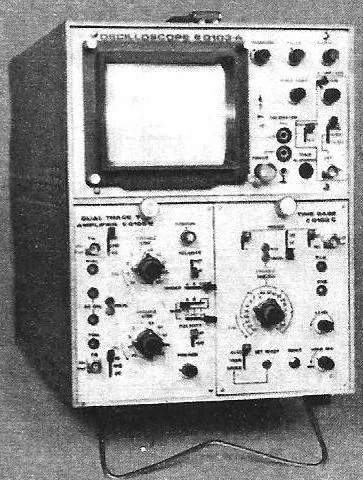
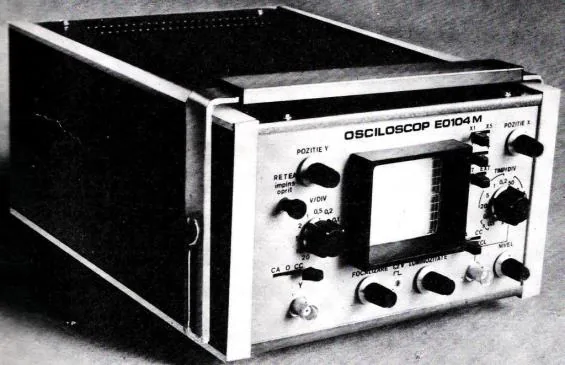
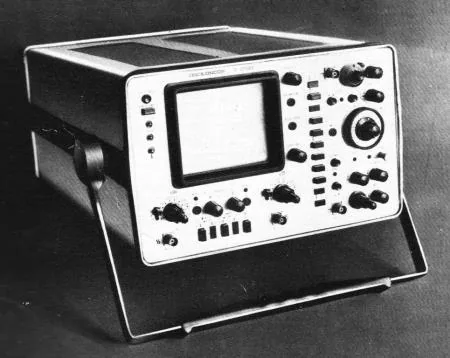
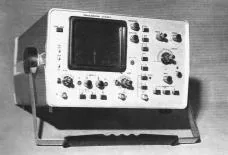
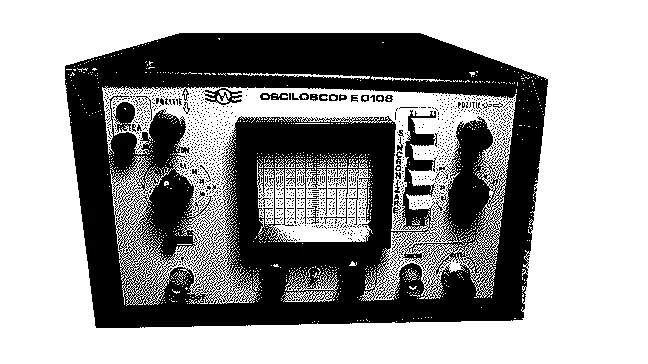
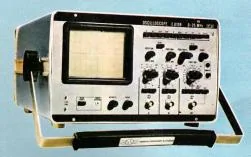
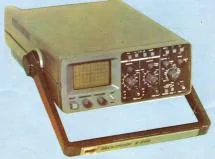
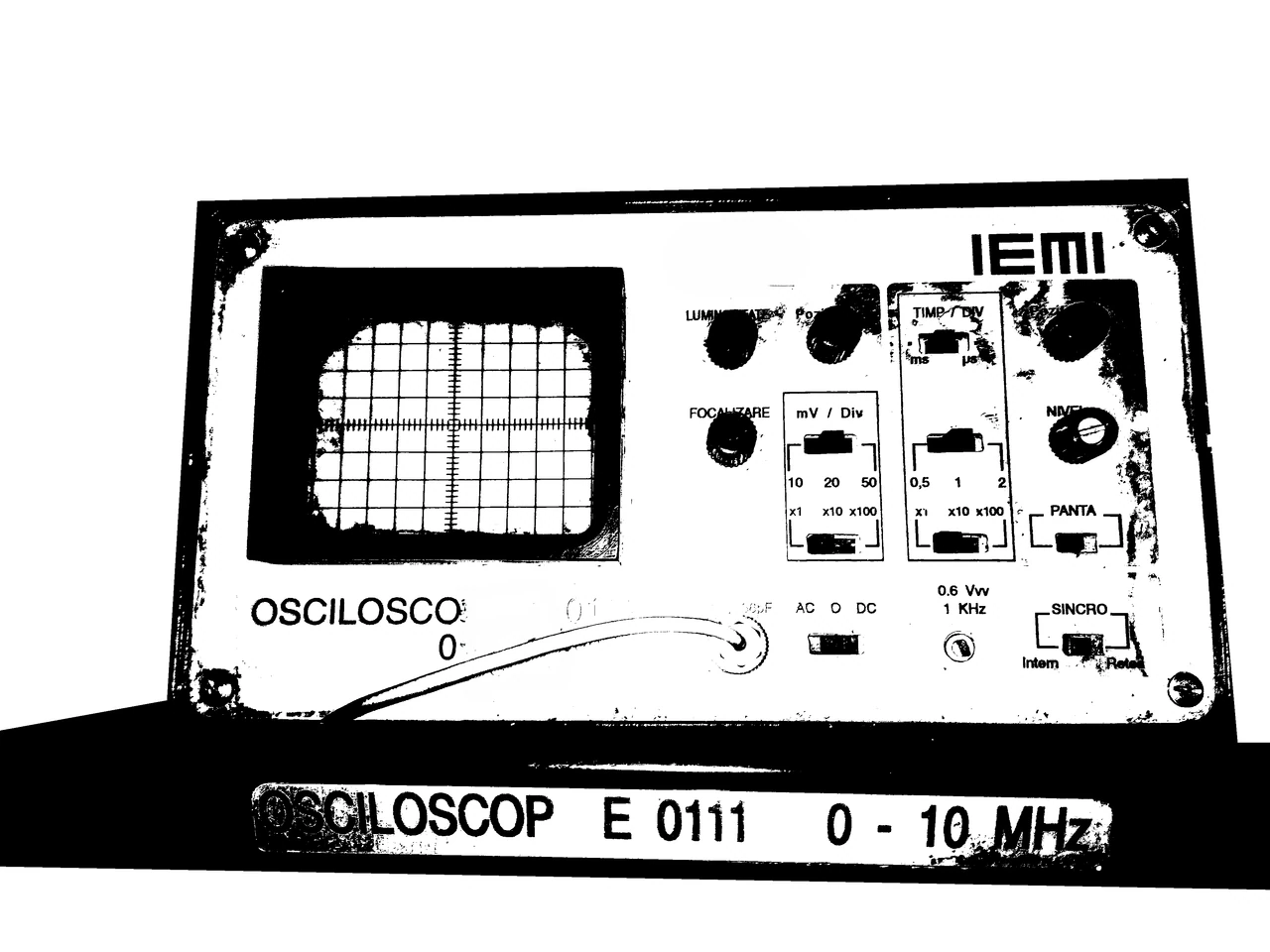
IEMI was set up to manufacture measuring and industrial equipment, largely based on designs developed through research contracts with ICE, the Romanian institute for electronics research [2]. Its range included oscilloscopes, digital multimeters, counters and frequency meters, signal generators, instruments for electrical and non-electrical quantities, and power supplies [2]. Well-known examples are the E0302 multimeter, the E0102 oscilloscope and the E0502 Versatester.
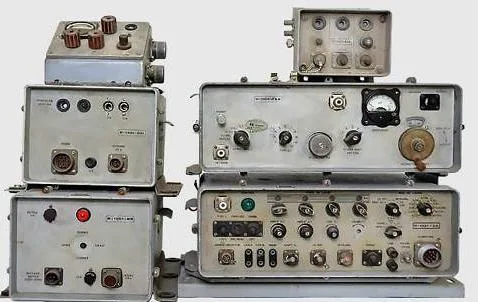
The enterprise also produced medical and industrial electronics, as well as portable, mobile and fixed radiotelephones built under licence from the Swedish company SRA (Svenska Radio Aktiebolaget) [1]. Measuring instruments were in fact the smaller part of the output: over 70% of the activity consisted of professional radio communications equipment for the Ministry of National Defence and the Ministry of the Interior [2][3], alongside a wide range of military products [1].
The measuring instruments were mostly of medium class, for factory laboratories, secondary and university education, ordinary production processes and triage medicine [3]. All of IEMI’s measuring, medical and industrial instruments were designed at ICE: IEMI’s engineers took over each approved prototype, adapted it to their own technology, made a “zero series” approved together with ICE, and produced the manufacturing documentation, tools, technical book with repair manual, sales brochure, and the training and service network [3]. The military transceivers were also designed at ICE; a licence was initially bought only for the radiotelephones, and IEMI later modernised both their circuits and their manufacturing technology [3].
The factory’s own test equipment came largely from Tektronix, Hewlett-Packard, Takeda Riken, Marconi, Philips, Rohde & Schwarz, Orion, RFT and Tesla [8]. In its first decade, its instruments used many imported components (metal-film resistors, tantalum and Mylar capacitors, quartz crystals, switches, seven-segment displays, LEDs, RF and power transistors, valves and some integrated circuits), while others came from IPRS Băneasa, Electroargeș and Microelectronica [8].
The military products made or planned at IEMI, under licence or from designs by ICE and by the army’s research institute (ITCPA), included portable radiotelephones, fixed radio stations for command centres and vehicle radio stations; UGAR-2 radio stations for tanks and armoured personnel carriers, under a Yugoslav licence of American origin; single-sideband fixed stations for the navy and electronic warning devices for buoys; equipment for warning of and marking chemically or radioactively contaminated areas, fitted on IMS vehicles; remote detonation devices for the engineer troops; and night sights, developed with IOR [3]. Its prospectuses of special products also show the AD 111 M, AD 3 and AD-32 radiation meters, the DET-2P and DET-2S dosimeters, the ZA-1038 mine detector and a GM 4600 M diesel generator set [10].
The book’s annexes of IEMI prospectuses group its civil products into oscilloscopes, frequency meters, voltmeters, multimeters and wattmeters, signal generators, instruments for components and circuits, instruments for non-electrical quantities, the N2300 modular strain gauge system, industrial electronics, power supplies and professional radio communications. For all its industrial installations the factory offered, on request, technical assistance with installation and commissioning, training for the operating staff and, case by case, cooperation on complete installations (generator plus process equipment) [13].
Output, 1970–1985
The output figures come from a detailed production manuscript for 1970–1985, found by the book’s authors in a second-hand bookshop and given to the museum of the Politehnica University of Bucharest [3]. In that period IEMI made 63,378 instruments for electrical quantities, 16,723 for non-electrical quantities, 110 medical and 320 industrial devices, 24,146 power supplies, 3,264 amplifiers for wired radio (radioficare) networks, 34,179 collective antenna amplifiers and 996,354 radio-TV and wired radio connectors [3]. In 1972–1985 it also made 74,765 portable, 91,180 mobile and 48,155 fixed radiotelephones and 1,572 ship radiotelephones, with their accessories and spare parts [3]. In IEMI’s price list from the early 1980s, an E0102 oscilloscope cost 16,150 lei and a portable radiotelephone 6,900 lei; for comparison, a Dacia 1300 car cost 70,000 lei in 1985 [9].
The value of the production programme rose from 82.85 million lei in 1969 to 340.65 million lei in 1975, of which 190.20 million lei was “special” radio equipment and 35 million lei radiotelephones [3]. In 1973 the army complained that it had not received a number of radio transceivers while IEMI reported large plan overfulfilment; an analysis showed that the army had asked for the stations to be fitted in ARO vehicles at the factory, and the value of each vehicle, about ten times that of the radio, was counted as IEMI’s output [12]. The number of product types in production grew from 77 in 1975 to 138 in 1985, all still built with discrete components, printed circuit boards and metal chassis and cases [3]. Many stayed in production for more than ten years, such as the E0102 oscilloscope (1974–1985), the E0303 digital voltmeter (1971–1985), the T-1 moisture meter, the I4201 stabilised supply, and the 4 MF-S versions of the RTP-MF and RTM-MF radiotelephones (1970–1985) [3].
The book’s authors place most of IEMI’s products in the medium rather than the upper quality class, which limited exports [3]. After 1980, orders to give up imported parts and even expensive Romanian materials (gold for contacts, copper, aluminium for cases) caused quality and reliability problems, and some products could not be exported even within Comecon commitments; the book’s example is the R1180 military radio station [3]. Successful exports included the strain gauge system, delivered to East Germany for more than seven years, and the Colibri radiotelephone for Comecon countries [3]. By 1988 IEMI also made more advanced products, such as the R 8143 mobile radiotelephone with frequency synthesis and the Signum 3000 [3].
To cope with the cuts in imports in the 1980s, IEMI set up its own research and design workshop, which designed measuring instruments and radiotelephones around the components then available in Romania [8]. By 1988 its radiotelephones were of its own design rather than built under licence, and 65.1% of its product range was new or modernised [8]. In 1988 it printed brochures in four languages with an eye on exports, sent an advertising caravan with its products around the country, and marked its 20th anniversary with a technical symposium [8].
After 1989
In 1990 the branch ministries, their industrial centrals and the foreign trade enterprises were dissolved, and the army’s procurement policy changed; with few orders, IEMI received less and less funding for new products [3]. It was the first enterprise on the Pipera electronics platform to be privatised [3]. According to its last director, it was privatised by a management and employee buyout (MEBO) in February 1991; another source dates the privatisation to 1995, by direct negotiation with the state privatisation agency [7].
IEMI SA was a member of PATROMIL, the Romanian employers’ association of military equipment makers, and its ISO 9001 quality system was also certified by the Ministry of Defence and the Ministry of the Interior [7]. Its own presentation lists a site of about 52,000 m² (38,000 m² for production), 717 employees, and a capital held 62% by the employees’ association, 37% by other shareholders and 1% by the state [7]. Its range then included HF and VHF radio stations, mobile military communication centres, dosimetry equipment, mine detectors and antennas; 10 and 25 MHz oscilloscopes, frequency meters up to 500 MHz, voltmeters and digital multimeters, RF wattmeters, signal generators, strain gauges, level and moisture meters and power supplies; and portable, mobile and fixed radiotelephones for four bands between 30 and 520 MHz, with 0.5–50 W output [7]. The number of employees fell from 817 in 1999 to 376 in 2004, 75 in 2006 and one in 2008 [7]. The book’s authors blame the decline partly on the Ministry of Defence, which imported large numbers of radiotelephones from 1990 although IEMI had several types in production [7]. In January 2007, after six years of only occasional and small orders from the defence forces, the shareholders decided to close IEMI’s defence production capacities; by law the decision also needed the approval of the Supreme Defence Council [11].
In 1991 IEMI was privatised, keeping its name and field of activity [1]; the “IEMI SA” logo in the gallery below belongs to this period. The liquidation process began in 2006 and bankruptcy was declared in 2008 [1] (another source dates the start of the bankruptcy procedure to 2009 [2][7]). Around 2010 the buildings were demolished entirely, some of them by implosion [2]. The postface of the book’s second volume says that the majority shareholder forced IEMI into bankruptcy in 2006 and that the buildings were demolished in 2009–2010 [14]. The site is now occupied by a complex of residential tower blocks [4].
With the disappearance of IEMI, Romanian state production of professional and industrial electronic equipment practically came to an end [1][2].
In 1989
In 1989 IEMI belonged to the Industrial Central for Electronics and Computer Technology (CIETC) of the Ministry of the Electrotechnical Industry; its entry still shows the waveform emblem from the FEMI years [6].
Gallery
 No image available
 No image available
 No image available
Devices in the archive (147)
 No image available
 No image available
 No image available
 No image available
 No image available
 No image available
 No image available
 No image available
 No image available
 No image available
 No image available
 No image available
References
- [1]Cronica IT – „Este înființată Fabrica de Aparate Electronice de Măsură și Industriale (FEMI)”, after N. Millea, Revista de istorie a electrotehnicii românești, vol. 5, no. 1–2
- [2]N. Millea, I. Constantinescu – „Un secol de electronică în România (II). Electronica profesională”, NOEMA XVIII, 2019
- [3]N. Millea (coord.) et al. – „Electronica românească. O istorie trăită”, vol. II „Electronica profesională”, AGIR, sections III.1 „Scurt istoric, FEMI/IEMI 1968–1989”, III.2 „Producția IEMI” and III.3 „Comentarii tehnico-economice”, pp. 292–317, and annex III.2.3, pp. 383–386
- [4]Simply Bucharest – „Foto-raid pe platforma Pipera”, 2011
- [5]D. F. Lăzăroiu, N. Millea et al. – „Electronica românească. O istorie trăită”, vol. I, AGIR, chapter I „Industria electronică românească”
- [6]N. Drăgulănescu – „Agenda radioelectronistului”, 2nd edition, 1989, chapter 52 „Unități de cercetare, proiectare, producție și service – în industria electronică – din cadrul M.I.Et.”, pp. 742–749
- [7]N. Millea (coord.) et al. – „Electronica românească. O istorie trăită”, vol. II „Electronica profesională”, AGIR, section III.5 „IEMI după 1989”, pp. 333–341
- [8]N. Millea (coord.) et al. – „Electronica românească. O istorie trăită”, vol. II „Electronica profesională”, AGIR, section III.4 „Viața în IEMI la început de drum” (N. Drăgulănescu), pp. 317–332
- [9]N. Millea (coord.) et al. – „Electronica românească. O istorie trăită”, vol. II „Electronica profesională”, AGIR, annex III.2.5 „Lista cu prețurile produselor – IEMI”, pp. 393–396
- [10]N. Millea (coord.) et al. – „Electronica românească. O istorie trăită”, vol. II „Electronica profesională”, AGIR, annex V.2.2 „Produse speciale fabricate la IEMI”, pp. 710–722
- [11]N. Millea (coord.) et al. – „Electronica românească. O istorie trăită”, vol. II „Electronica profesională”, AGIR, annex V.5.1 „Proprietarii IEMI se grăbesc să arunce la coș producția militară” (Săptămâna Financiară, 2007), pp. 511–513
- [12]N. Millea (coord.) et al. – „Electronica românească. O istorie trăită”, vol. II „Electronica profesională”, AGIR, section VI.6 „Cum se năștea uneori o indicație de partid” (N. Millea), pp. 554–568
- [13]N. Millea (coord.) et al. – „Electronica românească. O istorie trăită”, vol. II „Electronica profesională”, AGIR, annexes III.2.6–III.2.15 (IEMI prospectuses), pp. 608–689
- [14]N. Millea (coord.) et al. – „Electronica românească. O istorie trăită”, vol. II „Electronica profesională”, AGIR, „Postfață la volumul 2” (D.-F. Lăzăroiu), pp. 733–737