 No image available
FEPER
Manufacturer
- Also known as
- Fabrica de Echipamente Periferice; IEPER – Întreprinderea de Echipamente Periferice
- Country
- Romania

- Address
- Bd. Dimitrie Pompei nr. 8, sector 2, București (1989)
- Founded
- 1970
- In the archive
- 36 devices
- Last edited
- 16 NOV 2026
History
FEPER (Fabrica de Echipamente Periferice, the Peripheral Equipment Factory) made peripheral equipment for the Romanian computers built by ICE Felix. It was set up in 1970, as one of the units created together with ICE [1], and produced under licence agreements with Western firms, initially Memorex [2].
History
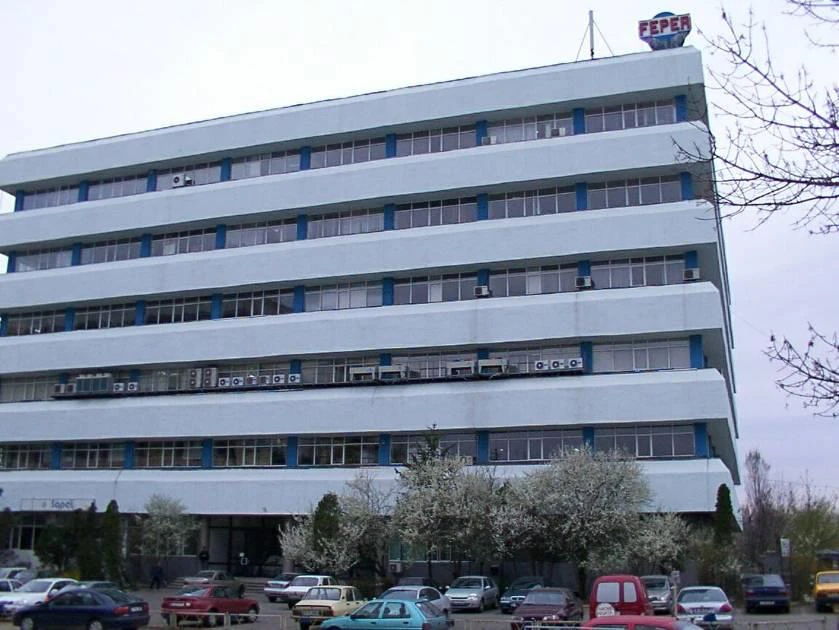
Un secol de electronică în România gives a different start: FEPER was set up on 1 January 1975 by HCM 1348 of 24 October 1974, under the CIETC industrial centre, to make magnetic disks and tapes, printers, card punches and other equipment for computers; in the end it made only the „other equipment” [5]. It bought no licence, only a few kits for very small series [5]; this differs from the Memorex licences mentioned above [2]. It stood at 8 Dimitrie Pompei Boulevard on the Pipera platform, opposite the picture tube factory and next to Conect, with which it shared utilities and similar building designs, on 30,000 m² (24,000 m² built) [5]. In its first years it did not use all its space and housed ICPAEBA (later AEROFINA) and the CIETC industrial centre until their buildings were finished [5]. It made transistor bases for IPRS and most of the mechanical parts for Rom Control Data, and set up a branch with 12 jobs at Vălenii de Munte, which assembled keyboards and let it hire graduates when Bucharest no longer accepted them [5]. It had 1,610 employees in December 1989 [5].
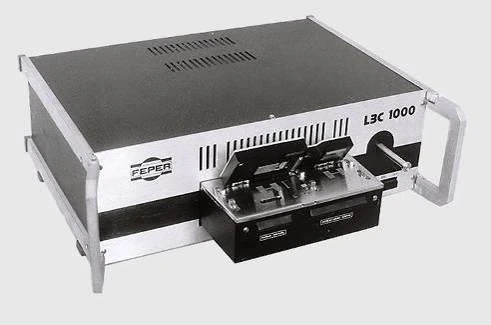
It began with products taken over from ICE Felix, such as the TZ11, P16 and TO2 keyboards and punch, and then made equipment designed by Romanian institutes and by its own design offices: the DAF1001, DAF1001P, DAF2020, DAF2013 and ALFAGRAF displays, the Diagram 2030 and DIGRAF graphic terminals, the TT205 terminal, the SIDM, SIV2400 and SIV4800 data entry systems, the CP100, IMI, IGRAF and ISM printers, the MD10, ICT800, PIF01 and PIF04 plotters, the MU31 and MU44 monitors, the LB300 tape reader, the UDF301 floppy disk unit, the SA-30L power supply, the TO3 and TAN503 keyboards, the AECC8020, AECC8023 and CASIER cash registers, the ABAC desk calculator and the Junior XT and Junior 80 computers; some items were for military use [5]. In 1990–1995, with the computer industry collapsed, it made industrial fan heaters, heaters, small farm machinery, advertising signs and metalwork, and its staff fell from 1,610 to 675 [5]. From July 1995 it has worked as a business centre, renting space to other firms, and a production centre for precision sheet-metal work (racks, subracks, enclosures, metal furniture), mostly to designs of customers in France, Germany, England and Switzerland; it had 130 employees and a turnover of 3 million euros at the time of writing [5]. The LBC 1000 capacitive punched tape reader made by FEPER is shown in a photograph dated 1976; at the radar base of Pipera it read the punched tape of the SAO-1 radar simulator [6].
The site after 1989
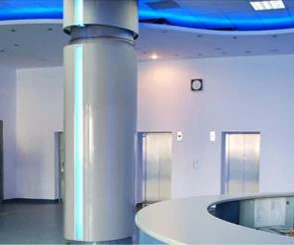
FEPER made peripheral equipment for computers; around 2011 its administrative building had become a business centre, and part of its machining hall remained [4].
In 1989
In 1989 the enterprise was listed as Întreprinderea de Echipamente Periferice (IEPER), with the FEPER logo, within the Industrial Central for Electronics and Computer Technology (CIETC) of the Ministry of the Electrotechnical Industry. It made peripheral equipment for electronic data processing (terminals, video terminals, graphics equipment) and metal parts and accessories for computing equipment [3].
Gallery
 No image available
 No image available
 No image available
 No image available
Devices in the archive (36)
 No image available
- AECC8023 (FEPER)
- Diagram 2030 (FEPER)
- DAF2013 (FEPER)
- MD10 (FEPER)
- ICT800 (FEPER)
- LB300 (FEPER)
- MU31 (FEPER)
- SIV4800 (FEPER)
- DIGRAF (FEPER)
- IGRAF (FEPER)
- MU44 (FEPER)
- ABAC (FEPER)
- ALFAGRAF (FEPER)
- CASIER (FEPER)
- ISM (FEPER)
- Junior XT (FEPER)
- PIF01 (FEPER)
- Junior 80 (FEPER)
- PIF04 (FEPER)
- UDF301 (FEPER)
- AECC8020 (FEPER)
- SIDM (FEPER)
- SIV2400 (FEPER)
- TT205 (FEPER)
References
- [1]D. F. Lăzăroiu, N. Millea et al. – „Electronica românească. O istorie trăită”, vol. I, AGIR, chapter I „Industria electronică românească”
- [2]Jurnalul Național – „Felix și industria românească de calculatoare”
- [3]N. Drăgulănescu – „Agenda radioelectronistului”, 2nd edition, 1989, chapter 52 „Unități de cercetare, proiectare, producție și service – în industria electronică – din cadrul M.I.Et.”, pp. 742–749
- [4]N. Millea (coord.) et al. – „Electronica românească. O istorie trăită”, vol. II „Electronica profesională”, AGIR, section VI.5 „Foto-raid pe platforma Pipera”, pp. 541–553
- [5]N. Millea, I. Constantinescu (coord.) – „Un secol de electronică în România”, Editura Academiei Române, 2020, section VII.7, pp. 346–352
- [6]N. Millea, I. Constantinescu (coord.) – „Un secol de electronică în România”, Editura Academiei Române, 2020, section VI.2.5, pp. 302–303