 No image available
FEA
Manufacturer

History
FEA (Fabrica de Elemente pentru Automatizări, the Factory of Automation Elements) in Bucharest produced components and equipment for industrial automation. It was set up in 1960–1962, together with its design institute, IPA (Institutul de Proiectări pentru Automatizări) [1].
Between 1965 and 1975 it developed strongly on the basis of Japanese licences, later continued with its own research [1].
History
Un secol de electronică în România says the decree setting up FEA was issued in 1965, for automation equipment made under a licence bought from Hokushin, a member of the Yokogawa group of Japan – the e-line system of field and panel instruments – and that its building on Calea Floreasca was put up in 1965–1968 [4]; the dates 1960–1962 above come from the first volume of the series [1]. It had about 1,000 employees at first, about 1,800 in 1979 and about 2,200 in 1989 [4]. The first five Felix C-256 computers were assembled on the FEA platform, because the computer factory was still being built [4]. In the early 1970s a Foxboro licence was bought for field instruments for hazardous, especially explosive, areas, and the Hokushin instruments were moved to integrated or hybrid circuits and the 4–20 mA signal [4]. Transducer production then passed to FEPA Bârlad (pressure, level, flow) and ITRD Pașcani (temperature, pH), and part of the panel instruments to IEIA Cluj-Napoca [4]. FEA made dispatching, command and control equipment with the UNILOG and USILOG modules of the automation institute IPA; with IPA it made the Felix C32P process computer in 1974, the ECAROM 800 series and, from the mid-1970s, the NUMEROM numerical control equipment [4]. In 1978 it set up computer-aided design and manufacture of double-sided and multilayer printed circuit boards with plated-through holes, meant to serve the whole industry [4]. In the 1980s it developed the SRA modular automation system, a reliability laboratory for screening components, dispatching equipment for irrigation and other fluid transport systems, and the HEMODIAROM renal dialyser [4].
After 1990, as FEA SA, it built automation panels and cabinets, used Siemens SIMATIC S5 and S7 programmable controllers under a contract with Siemens, added a surface-mount assembly line and made commercial electronic scales and weighing equipment; it had about 1,000 employees in 1991–1996 [4]. In 1997 ROMENERGO SA bought the majority stake from the State Ownership Fund; production moved in 2005 to a new building on the former IMGB site in Berceni, the Calea Floreasca land was sold, and in 2008 the company went bankrupt and dismissed all its staff at the end of the year; in 2020 it was listed as struck off the Trade Register [4].
The site after 1989
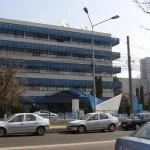
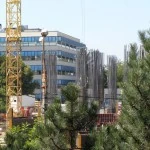
FEA was built with consultancy and assistance from the Japanese firm Hokushin, and its design and organisation served as a model for later factories in the branch; it stood on Calea Floreasca but was considered part of the Pipera electronics platform [3]. Around 2011 only its administrative building remained, as the headquarters of the Romenergo holding; the halls and annexes had been demolished [3].
In 1989
In 1989 the enterprise was listed as Întreprinderea de Elemente de Automatizare (IEA), still with the FEA București logo, within the Industrial Central for Automation Equipment (CIEA) of the Ministry of the Electrotechnical Industry. Its design institute, IPA, then also called ICSIT-A, was at 18 Kalinin Boulevard [2].
Gallery
 No image available
 No image available
Devices in the archive (8)
References
- [1]D. F. Lăzăroiu, N. Millea et al. – „Electronica românească. O istorie trăită”, vol. I, AGIR, chapter I „Industria electronică românească”
- [2]N. Drăgulănescu – „Agenda radioelectronistului”, 2nd edition, 1989, chapter 52 „Unități de cercetare, proiectare, producție și service – în industria electronică – din cadrul M.I.Et.”, pp. 742–749
- [3]N. Millea (coord.) et al. – „Electronica românească. O istorie trăită”, vol. II „Electronica profesională”, AGIR, section VI.5 „Foto-raid pe platforma Pipera”, pp. 541–553
- [4]N. Millea, I. Constantinescu (coord.) – „Un secol de electronică în România”, Editura Academiei Române, 2020, chapter VII introduction and section VII.2, pp. 321 and 324–329