 No image available
IPEE Curtea de Argeș
Manufacturer
- Also known as
- Întreprinderea de Piese Electronice și Electrotehnice; ICEP – Întreprinderea de Componente Electronice Pasive (1972); IPEE Electroargeș (1977–1991); IPEE Amiral Trading Impex (from 2004)
- Country
- Romania

- Founded
- 1972
- In the archive
- 29 devices
- Last edited
- 16 NOV 2026
History
IPEE (Întreprinderea de Piese Electronice și Electrotehnice, the Enterprise for Electronic and Electrotechnical Parts) in Curtea de Argeș produced passive electronic components. Established in 1972, it doubled the production of passive components that had started at IPRS Băneasa [1].
History
Un secol de electronică în România says it was founded in 1972 as ICEP (Întreprinderea de Componente Electronice Pasive), which took over the resistor lines and part of the capacitor lines made under the Thomson-CSF licence in section 2700 of IPRS Băneasa in 1972–1973, with their product range [2]. The section on IPRS dates its founding to 1973, with the transfer of the carbon resistor, ceramic capacitor and thermistor lines, followed by wire-wound resistors (1974), polystyrene capacitors (1980) and metallised polyester capacitors (1982) [2]. In 1977 ICEP merged with Electroargeș as IPEE Electroargeș, adding household electrical products and low-voltage switchgear; its seat was at 12–14 Albești Street [2]. Its two catalogues, in English, covered 16 families of resistors (carbon film, wire-wound, ceramic, varistors and thermistors) and 6 families of capacitors (ceramic, trimmer, polyester film and others), in hundreds of variants; it made tens of millions of components for the home market and for export [2]. In 1991 the companies separated as S.C. IPEE S.A., with 3,200 employees, and S.C. Electroargeș S.A., with 2,300 [2]. IPEE S.A. headed for bankruptcy and was privatised; in 2004 an Italian firm bought the majority stake and it became S.C. IPEE Amiral Trading Impex S.A., moving to its own building at 5 C Albești Street, with 24 employees at privatisation [2]. It first traded household and electrical products and from 2008 also made soldering irons, electric incubators, sockets, switches, plugs and household machines; in 2015 it had a turnover of 17.8 million lei and 193 employees [2].
Gallery
 No image available
 No image available
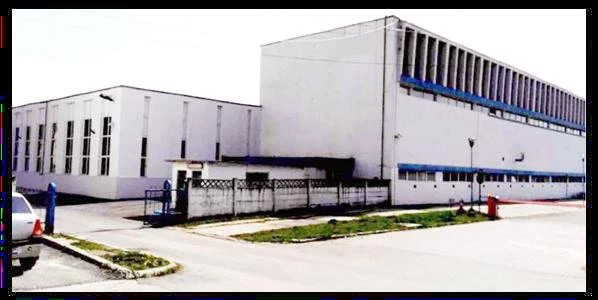 No image available
Devices in the archive (29)
- RBT 5000 (IPEE Curtea de Argeș)
- RBT 5000-L (IPEE Curtea de Argeș)
- RCG, RMG (IPEE Curtea de Argeș)
- RGM 7000 (IPEE Curtea de Argeș)
- RMG 2012, RCG 2012 (IPEE Curtea de Argeș)
- RPM 3000 (IPEE Curtea de Argeș)
- RR 3300 (IPEE Curtea de Argeș)
- TG 621 (IPEE Curtea de Argeș)
- TG 6000 (IPEE Curtea de Argeș)
- TG-021 (IPEE Curtea de Argeș)
- TG-121 (IPEE Curtea de Argeș)
- TG-1000 (IPEE Curtea de Argeș)
- TG-1100 (IPEE Curtea de Argeș)
- VG-1000 (IPEE Curtea de Argeș)
- VP 10000 (IPEE Curtea de Argeș)
- VP 11000 (IPEE Curtea de Argeș)
- VT 41000 (IPEE Curtea de Argeș)
References
- [1]D. F. Lăzăroiu, N. Millea et al. – „Electronica românească. O istorie trăită”, vol. I, AGIR, chapter I „Industria electronică românească”
- [2]N. Millea, I. Constantinescu (coord.) – „Un secol de electronică în România”, Editura Academiei Române, 2020, sections VIII.1.2.6 and VIII.2, pp. 410 and 434–435